
October 29, 2026
How Much Sodium Do You Need Per Hour? A Guide for Marathon, Ultra and Hyrox
Ask ten runners how much sodium they take per hour and you'll get ten answers. Some swear by salt tabs every 30 minutes. Others drink water and never think about it. We're four friends in Arizona who train for ultramarathons, marathons, Hyrox and bodybuilding, so this question comes up on every long run we do together. Here's what the research actually says, and how to turn it into a plan that fits you.
The short answer
For long, sweaty efforts, most expert guidance lands in the same neighborhood:
- About 300–600 mg of sodium per hour during prolonged exercise, the range attributed to the American College of Sports Medicine (ACSM) in a 2022 review of sodium and endurance sport[1].
- Around 450 mg per hour, which one sports-medicine review describes as the minimum needed to maintain plasma volume and slow the drop in blood sodium that some marathon runners experience[2].
- More than that for some people: heavy, salty sweaters in the heat, and ultra runners who drink a lot of fluid over many hours[3].
Those are starting points, not prescriptions. The ACSM's position stand on fluid replacement is clear that sweat rates and sweat electrolyte content vary so much between people that individual plans are recommended[4].
Why sodium needs vary so much
How much sodium you lose comes down to two numbers: how much you sweat, and how salty that sweat is.
Sweat rate
Average sweat rates in athletes range from about 0.3 to 2.4 liters per hour[1]. Heat, humidity, pace, body size and fitness all push that number around. A summer long run in Phoenix is a different sport, physiologically, from the same distance on a cool spring morning.
Sweat sodium concentration
Sweat sodium also varies widely from person to person. The 2022 review cites an average of roughly 1 gram of sodium per liter of sweat, but some people sit well above or below that[1]. Heat acclimation is one of the factors that changes sweat sodium, which is one reason your needs in May can differ from your needs in August[5].
Multiply the two together and you can see why one runner might lose a few hundred milligrams an hour while another loses well over a gram.
Sodium by event
Marathon
For most people, a marathon is long enough that sodium starts to matter, especially in warm weather. A modelling study of sodium needs found that for an elite marathon, targeted sodium replacement wasn't necessary in realistic scenarios, so athletes could choose sodium by taste and comfort[3]. Recreational runners are out there longer and often drink more, so a sodium-containing drink in the 300–600 mg per hour range is a sensible place to start testing[1].
Ultramarathon
This is where sodium gets more attention, and more debate. The same modelling work found that a 160 km (100-mile) ultra could require meaningful sodium replacement for runners with saltier sweat who replace most of the fluid they lose[3].
There's an important counterpoint. In a study of a hot 161 km ultramarathon, total sodium intake wasn't related to cramping, nausea, dehydration or low blood sodium among finishers[6]. The bigger risk across the research is drinking far more fluid than you lose. Sodium helps, but it doesn't make overdrinking safe[7].
Hyrox
For most athletes a Hyrox race is far shorter than a marathon, run indoors, with only short windows to drink between stations. That means you're unlikely to need ultra-level sodium. Starting the race well hydrated, then sipping a sodium-containing drink when you can, is a practical approach. If you're a heavy sweater or the venue is hot, sodium matters more.
How to find your number
You don't need a lab to get useful data. The ACSM recommends estimating your sweat rate by weighing yourself before and after exercise[4], and a methods review calls change in body mass the simplest and most accurate way to measure whole-body sweat rate[5].
- Weigh yourself (minimal clothing) before a 60-minute run at race effort.
- Track how much you drink during the run.
- Towel off and weigh yourself again right after.
- Weight lost plus fluid drunk is roughly your sweat for that hour. Each pound is about 16 oz (each kilogram is about 1 liter).
- Repeat in different weather. Your summer number will likely be higher.
Then pair it with a starting sodium target from the ranges above and adjust. If you finish with salt crusted on your hat, crave salty food, or feel flat after long hot sessions, you may need more. More guides on sodium, sweat and heat are on our Hydration Guides page.
Turning your number into a race plan
- Start every long effort normally hydrated. The ACSM recommends beginning exercise with normal hydration and electrolyte levels[4].
- Drink to a plan, not a quota. The goal during exercise is to avoid losing more than about 2% of body weight from water loss[4], without drinking so much that you gain weight[7].
- Count all your sodium. Gels, chews, broth and salty snacks all add up. In the ultramarathon study above, most of runners' sodium came from food and drink, not capsules[6].
- Practice it in training. Nothing new on race day, including your electrolyte mix.
Where Good Nutrition fits
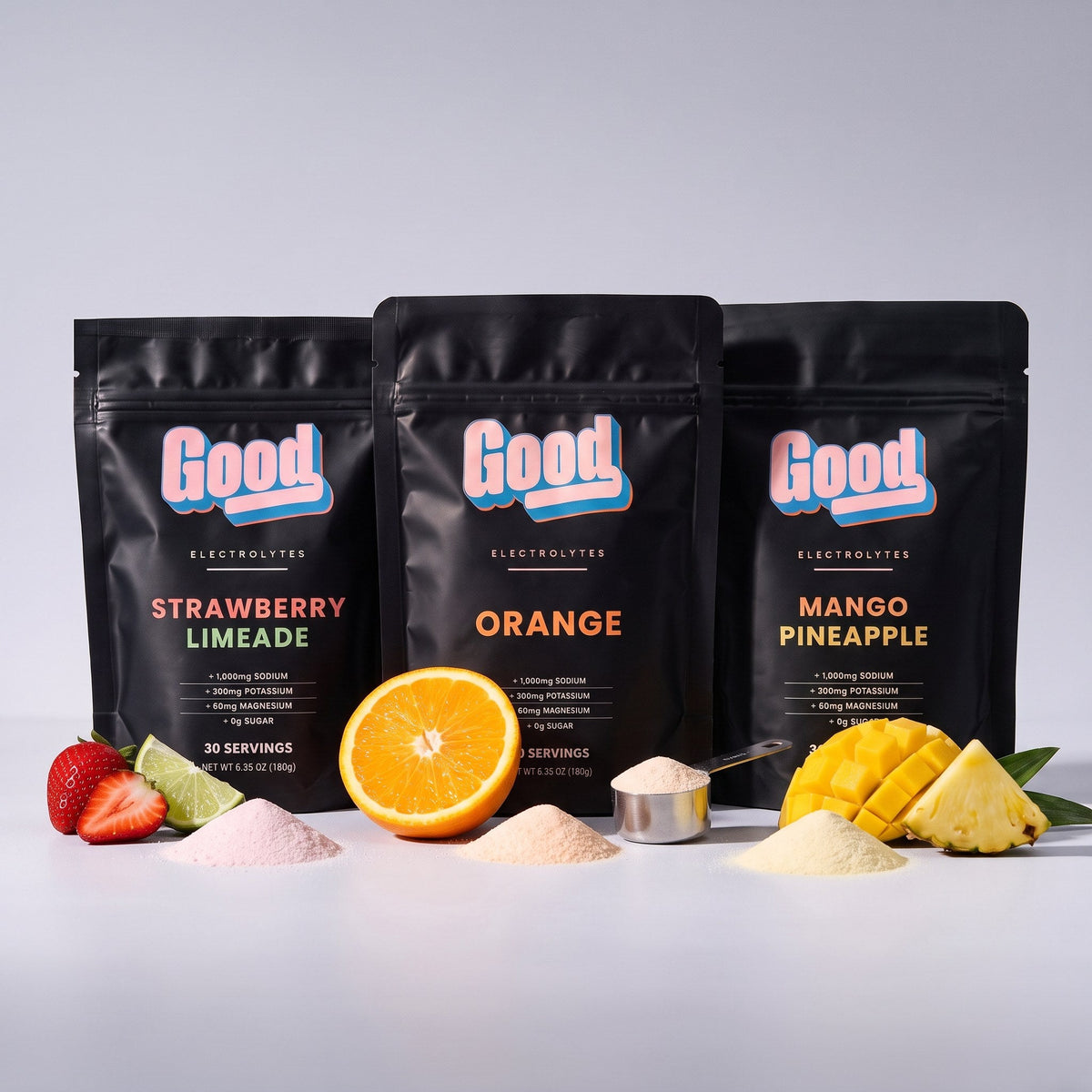
We built Endurance Electrolytes for the long, hot sessions we train through. Each scoop has 1,000 mg of sodium, 300 mg of potassium and 60 mg of magnesium, with 5 calories, 1 g of carbs and 0 g of sugar. It's sweetened with stevia, with no artificial sweeteners, and has six ingredients, all on the label.
Because 1,000 mg is more than the 300–600 mg per hour general range, think of one scoop as more than one hour's worth for many athletes on many days. It suits heavy and salty sweaters, long hot efforts, and topping up before or after a big session. Mix it as the label directs, and test how it sits with you in training.
Since there's almost no sugar, you'll still want carbohydrate from gels, chews or food for anything long. That keeps fuel and electrolytes separate, so you can adjust each one on its own.
Want to try a few flavors on your long runs? The Starter Bundle has Orange, Pineapple Mango and Strawberry Limeade, 90 servings in all, with free shipping.
FAQ
How much sodium should I take per hour while running?
Many guidelines suggest about 300–600 mg per hour for prolonged exercise, with more for heavy or salty sweaters in hot conditions. Test your plan in training and adjust to how you feel.
Do I need electrolytes for a run under an hour?
Usually not. For most people, water is enough for shorter, easier sessions, and electrolytes become more relevant as runs get longer, hotter or sweatier.
Can too much sodium be a problem?
Yes, more isn't automatically better. Match intake to your losses, count sodium from food as well as drinks, and check with your doctor if you have a condition that requires limiting salt.
Does sodium prevent hyponatremia?
Not on its own. Research points to drinking much more fluid than you sweat out as the main risk, so drinking to a plan or to thirst matters as much as sodium.
This article is for general education and isn't medical advice. Sodium and fluid needs vary a lot from person to person. If you have high blood pressure, kidney or heart disease, are pregnant, or take medication that affects fluid or sodium balance, talk with your doctor before changing your salt intake or using a high-sodium electrolyte product.
Sources
- Effects of Sodium Intake on Health and Performance in Endurance and Ultra-Endurance Sports (Nutrients, 2022)
- Murray B. The role of salt and glucose replacement drinks in the marathon (Sports Med, 2007)
- McCubbin AJ. Modelling sodium requirements of athletes across a variety of exercise scenarios (Eur J Sport Sci, 2023)
- ACSM Position Stand: Exercise and Fluid Replacement (2007)
- Sweating Rate and Sweat Sodium Concentration in Athletes: A Review of Methodology and Intra/Interindividual Variability (Sports Med, 2017)
- Hoffman MD et al. Sodium Intake During an Ultramarathon Does Not Prevent Muscle Cramping, Dehydration, Hyponatremia, or Nausea (Sports Med Open, 2015)
- NATA Position Statement: Fluid Replacement for the Physically Active (2017)